


Music production involves many tasks, from conceptualizing an original musical project to connecting artists and musicians. To enter this field successfully, it’s helpful to gain an understanding of all that’s required of them and their skillsets.
Establish your own style to set yourself apart from other producers in your genre. This will enable you to stand out amongst them.

Train Your Ears
As is true of any creative field, music production can become draining if left without fresh inspiration and motivation. To stay motivated and inspired, try finding an activity outside your studio that keeps you motivated – anything from taking a walk to reading books can provide welcome relief from monotonous work life.
Understanding the various stages involved in music production – mixing and mastering – will give you insight into what a producer does as well as enabling you to produce songs yourself.
Finally, music producers should learn music theory. While this might not provide immediate benefits, music theory will certainly come in handy for their long-term benefit when creating any genre of music. Learning it helps musicians understand chord progressions, melodies, and harmonies as a basis of production – this will come in handy when producing any genre.
Learn an Instrument
Learning an instrument is essential for music producers of any skill level, as it can provide a refreshing creative outlet and lead to new ideas. Muscle memory may cause you to get stuck on certain riffs and chord progressions; therefore it is necessary to try new things occasionally.
As part of a musician’s musical education, it’s also essential to practice writing melodies, harmonies and basslines with different instruments in order to get a feel for how each sound will resonate in your chosen genre. This step can make or break the quality of your final product – learning music theory has its place; however, some masterpieces have come about through unrestricted experimentation and disregarding conventional rules altogether.
Practice Writing Music
Maintaining musical proficiency requires practicing your abilities regularly. Melody composition is one of the key components of music production and requires both intuition and theory knowledge for its successful creation.
Recognizing the various components of a song is an invaluable skill. Listening to diverse music will enable you to develop this talent and distinguishing basslines, drumbeats, melodies and harmonies is crucial in developing this talent.
Learning mixing and mastering techniques can also prove helpful when preparing tracks for distribution. As the final stage in production, mixing and mastering ensure that all parts of a song sound consistent and cohesive while providing “glue” that makes an album cohesive when played back all together.
Decide on Music Equipment
An essential piece of music production equipment are high-quality headphones and studio monitors. Headphones excel at picking out subtle details, making them great for late-night sessions in shared spaces; studio monitors feature flat frequency response curves that accurately represent real world playback environments.
An equally crucial decision involves choosing your genre. While some aspiring producers might believe recording any genre doesn’t require different instruments or software, each genre requires special consideration when creating music.
Network with other producers. Collaborations can help keep up with new trends and expand your knowledge base, as well as providing mentorship opportunities and building up your portfolio. Once you’ve perfected your craft, consider signing with a record label so your tracks reach a wider audience.
Get Comfortable with a DAW (Digital Audio Workstation)
DAW stands for Digital Audio Workstation. This software enables you to record, edit, and mix music. For beginners it may seem intimidating; however, you can gain confidence quickly through online tutorials or video courses.
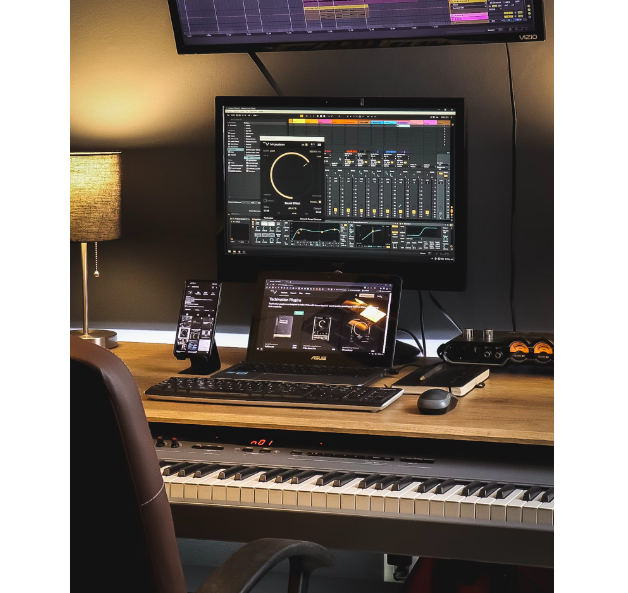
Gaining experience using a DAW will enable you to explore various sounds and instruments. Additionally, you will become acquainted with its tools – including effects plugins that control how loud your audio is (ex: compressors) or identify which frequencies exist in a sound (ex: equalizers).
Understanding MIDI can also be invaluable. As a digital language used for controlling virtual instruments in DAWs, MIDI allows you to control virtual instruments. Once there, you can begin shaping what each melody sounds like (its timbre). This is where sound design takes place.
Find Artists to Work With
Being friends with people who make music is invaluable when searching for artists to collaborate on production projects, particularly when looking for someone who can assist with technical aspects like mixing and mastering.
Producing music requires being open-minded and listening to various genres, styles and sounds as you never know when inspiration will strike! Hiding behind one sound could mean missing out on exciting opportunities.
Many producers juggle multiple ongoing tracks in order to maintain an uninterrupted stream of creative energy, and it’s wise to seek feedback from fellow musicians and producers as often as possible – this will allow you to improve your skills while remaining competitive within the industry.
Get Good at Recording
While mastering your tools, take time to experiment with all the sounds your equipment provides. A clear vision for your track’s concept and direction will enable you to select the ideal sounds. Take inspiration from tracks you enjoy as well as artists whose work inspires you, but stay open-minded about exploring different music genres and production techniques.
Finding your own distinctive creative style is essential to becoming an accomplished producer. Be wary of falling into a routine by only producing certain genres or using presets over and over; experimentation will help you find your signature palette much quicker. Take breaks away from your computer screen whenever necessary by experiencing life in person – being outdoors will keep your passion alive for music production!
Mixing
Mixing and mastering are the final steps of music production. They allow producers to fine-tune the sound of each track so it sounds optimal on all platforms, devices, and formats.
Once your mix has been tweaked to perfection, it’s time for some fun: adding effects such as distortion, delay and reverb can really give your song its own identity and set it apart from its peers.
Keep your originality in mind; originality is of utmost importance in music production. Instead of mimicking other artists you admire when starting out in this field, find your own style that speaks to your passions and abilities to stand out from the competition and ultimately be more successful long-term.
Mastering
Mastering is the final and essential stage in music production, designed to optimize a track’s audio for playback on all available platforms and systems. This involves making adjustments such as equalization, compression, and limiting to achieve an evenly-balanced sound that plays well across devices and speakers.
Writing catchy and memorable melodies and harmonies is another crucial element of pre-production, requiring not only an understanding of music theory but also intuition and experimentation – some of the greatest melodies can emerge spontaneously!
Use friends and online communities to gather feedback on your tracks, refine your skills and gain feedback. Don’t forget to stay current with new software tools and production techniques as the industry evolves; create a portfolio to demonstrate your work – this will serve as an essential way of attracting clients and landing gigs!

Distribute Your Music
Network with artists, musicians and vocalists in your local area as well as other producers to form collaborations that produce chart-topping music – you’ll discover that doing this provides valuable opportunities to learn new things!
Take part in production contests to get an insider look into the industry. They provide an ideal opportunity to demonstrate your talents while testing out your abilities.
Producing music can be an immensely satisfying journey with limitless possibilities. Remember to continue honing your craft, staying up-to-date on industry trends, and never stop creating. Additionally, always secure copyright for your work as this shows labels and listeners that you take your work seriously – this process also prevents theft of your work!